

What’s Happening This Week in Reproductive Freedom for All
Reproductive freedom is not decided in only one place.
It is decided when a senator votes to confirm a Supreme Court justice. It is decided when someone who is pregnant asks a doctor for help and whether that doctor recognizes the danger they are facing. It is decided inside federal agencies that can make medication harder or easier to obtain. And increasingly, it is being decided by voters who are being asked to remember who used power to protect their healthcare and who helped take it away.
This week’s developments share one central lesson: policy becomes personal long before most politicians feel its consequences.
For patients, families, doctors, and voters, the stakes are not theoretical. They are care, safety, dignity, and the freedom to make decisions about our own bodies.
🗳️ Abortion Accountability Returns to the Maine Senate Race
Reproductive freedom took center stage again in Maine’s closely watched U.S. Senate race as Republican Senator Susan Collins faced Democratic challenger Troy Jackson in their first debate.
Jackson directly connected Collins’s 2018 vote to confirm Supreme Court Justice Brett Kavanaugh with the later destruction of the federal constitutional right to abortion. Collins defended her judicial voting record, saying she evaluated nominees on their qualifications rather than predictions about future decisions. The debate put Collins’s Kavanaugh vote and the fall of Roe back before Maine voters. The Washington Post
That history matters because Collins publicly argued before Kavanaugh’s confirmation that she did not believe he would overturn Roe v. Wade. Four years later, Kavanaugh joined the majority in Dobbs v. Jackson Women’s Health Organization, which did exactly that.
The Maine contest is also larger than one Senate seat. Control of the Senate can determine who confirms future federal judges and Supreme Court justices, who oversees federal agencies, and whether legislation protecting reproductive healthcare ever receives a vote.
Why it matters: Judicial confirmations can sound distant from everyday healthcare until a court changes the rules for millions of people. Elections determine who gets the power to cast those confirmation votes. Voters have every right to examine not only what candidates promise now, but what they did when reproductive freedom was actually on the line.
🤰 Pregnancy Can Become a Dangerous Moment for Abuse
Pregnancy should be a time when people receive more care and protection. For some, it becomes the moment an abusive partner tightens control.
New reporting documents how domestic abuse can begin or intensify during pregnancy, including physical violence, financial control, isolation, surveillance, and coercion. Survivors described pregnancy being used as another means of controlling their movements, money, relationships, and decisions. The Guardian
The consequences can reach directly into reproductive and maternal health. Abuse during pregnancy can endanger the pregnant person, the pregnancy, and the child. It can also make getting help harder. A person may be financially dependent on an abusive partner, afraid of retaliation, isolated from family, or unsure whether healthcare workers will recognize what is happening.
That makes maternity care more than checkups and tests. Doctors, nurses, midwives, and other healthcare workers can become critical points of contact for someone who may have few safe opportunities to ask for help.
Why it matters: Bodily autonomy means more than whether abortion or contraception is legal. It also means being able to make decisions about pregnancy, healthcare, relationships, and personal safety without coercion. Reproductive justice requires systems that recognize when those freedoms are being taken away and help people reach safety.

💊 The Abortion-Pill Battle May Be Waiting for Election Day
One of the biggest unresolved threats to reproductive freedom may not be disappearing. It may simply be waiting.
Reporting this week has renewed attention on indications that the Trump administration is delaying potential federal action against medication abortion until after the midterm elections. Attorney General Todd Blanche has previously criticized rules allowing abortion pills to be shipped and has faced pressure from anti-abortion organizations seeking new federal restrictions. Reporting says anti-abortion pressure on the administration could accelerate after the election. Common Dreams
That timing deserves scrutiny.
Medication abortion has become especially important after Dobbs, including for patients who live far from clinics or in states where abortion is banned. Changing federal rules governing mifepristone could therefore reach people far beyond Washington and affect doctors, pharmacies, telehealth providers, and patients across the country.
The possibility is particularly significant because Trump campaigned in 2024 saying he would not block access to abortion medication, while members of his administration and anti-abortion allies continue considering ways to restrict it.
Why it matters: Voters deserve to know what an administration intends to do before they cast their ballots, not afterward. Healthcare policy should not be hidden behind an election calendar. If federal officials are considering major restrictions on medication abortion, the public deserves transparency now.
💚 Good News Worth Carrying With You
Medical Knowledge Can Give People More Choices
Breast Cancer Awareness Month is bringing renewed attention to genetic testing and the information it can provide patients about their individual cancer risk.
A breast specialist interviewed by The 19th described genetic testing as an increasingly important tool, particularly for people with certain family histories or known higher-risk backgrounds. For some patients, identifying inherited genetic mutations can lead to earlier surveillance, preventive options, and important conversations with relatives who may share those risks. 19thNews
Genetic testing is not the right choice for everyone, and people can have complicated feelings about learning what their genes might reveal. That is exactly why informed consent and access to trusted medical guidance matter.
The good news is not simply that another test exists. It is that people can have more information with which to make decisions about their own bodies and healthcare.
That is what reproductive and bodily autonomy should look like: accurate information, knowledgeable healthcare providers, and patients empowered to decide what comes next.

📣 Take Action This Week
🗳️ Take Action» Check your registration, polling place, and what is on your ballot
Do not wait until Election Day to discover a registration issue, polling-place change, or ballot measure you have not read. Check your information now, review the full language of measures when possible, and understand what existing law would change.
🏥 Take Action» Find verified abortion-care providers and practical support resources near you
Even people who do not need care today may want to know what services are available where they live. Laws and provider availability can change, so use current information rather than relying on something you heard months or years ago.
❤️ Take Action» Support Organizations Doing the Bans Off Our Bodies Work
A Complete Guide: No Kings Vote Early is now available
Get the information you need to make your No Kings Vote Early voting plan, understand early voting options, and know what to expect before you cast your ballot. Make a plan, check the details, and be ready to vote early.

📢 Check out A Complete Guide: No Kings Vote Early - October 17, 2026
📍 Find a No Kings: Vote Early event near you
🙋 Host a No Kings: Vote Early event
Can’t find an event near you? Bring one to your community. Gather your neighbors. Help make sure every voice is heard.
👀 What We’re Watching
Medication abortion after the midterms: Watch the Justice Department and FDA closely. Anti-abortion organizations continue pressing the administration to restrict mifepristone, and reporting indicates significant decisions could be deferred until after votes are counted.
The Senate and the courts: Maine is only one race, but control of the Senate will determine who has enormous influence over judicial confirmations and federal reproductive-health policy. Collins’s Kavanaugh vote demonstrates how one confirmation can shape healthcare law years later.
State power: Governors and state legislatures will remain critical even where reproductive rights are protected by voters. Control of state government can determine how those protections are implemented, whether new restrictions are attempted, and whether access exists in practice rather than only on paper.
Patients behind the policy: We will keep watching for reporting that brings reproductive policy back to the people experiencing it, including pregnancy care, maternal health, coercion, miscarriage care, contraception, fertility care, and abortion access.
❤️ One Thing to Carry With You
Reproductive freedom is not one election, one court case, or one medication.
It is the freedom to decide whether to become pregnant, whether to continue a pregnancy, how to prevent one, when to seek care, what medical risks we are willing to accept, and what happens to our own bodies.
Those decisions belong to people, not politicians.
And when politicians appoint judges, control agencies, write laws, or hide their intentions until after an election, we have every right to demand answers and hold them accountable.
Pay attention. Ask questions. Read the fine print. Vote.
Our bodies are ours. Our healthcare is ours. And organized people still have enormous power to protect both.
Laurie Woodward Garcia
(paid with hugs and kisses, not bought by special interests)
Leader, People Power United
People Power United | In this community, we speak out, show up, and build power against racism, xenophobia, Islamophobia, antisemitism, homophobia, misogyny, sexism, ageism, ableism, sizeism, elitism, transphobia, misogynoir, and bigotry.
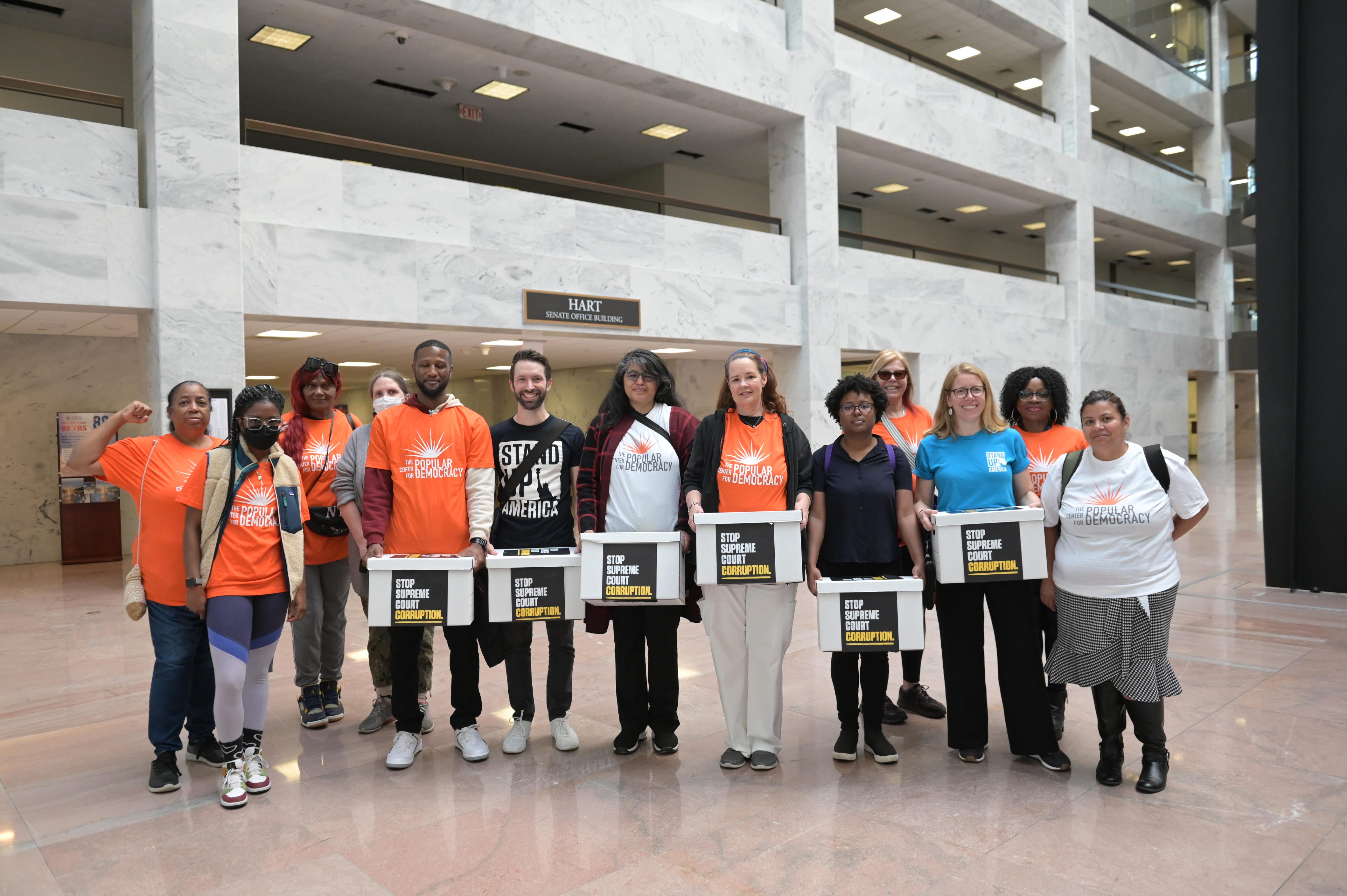
This is our moment to rise, resist, and reclaim our rights, freedoms, rule of law, and democracy. Millions of Americans are already refusing to back down — in the streets, at the ballot box, and in their communities.
Every movement that was ever won started with people who refused to quit. We are those people.
The future is not lost. It is being built — by us, right now.