

What’s Happening This Week in Reproductive Freedom for All
Reproductive freedom is being shaped this week by voters, federal agencies, and politicians asking for even more power.
In Idaho, organizers gathered more than 110,000 signatures to put abortion rights directly before voters. In Texas, Ken Paxton’s anti-abortion record is drawing renewed scrutiny as he seeks a U.S. Senate seat. And across several governor’s races, Republican candidates are distancing themselves from abortion bans and restrictions they previously supported.
Different stories. Same accountability question.
When politicians say they care about women’s health, bodily autonomy, or the will of voters, what have they actually done with the power they already had?
For patients and families, these are not messaging exercises. They determine whether someone can get care, whether a doctor can act, and whether voters can restore rights politicians took away.
🗳️ Idaho Voters Will Decide Whether to Restore Abortion Rights
Idaho voters will have a direct say on abortion access after organizers gathered more than 110,000 signatures to qualify Proposition 1 for the ballot.
The measure would restore abortion access roughly to the pre-Dobbs standard of fetal viability, around 24 weeks, replacing Idaho’s near-total ban. Current state law generally permits abortion only when necessary to save the pregnant person’s life, not simply to protect their health. The campaign was led by Idahoans United for Women and Families and was financed largely within the state. The Guardian
That matters because Idaho has become one of the clearest examples of how geography can determine healthcare. Patients with pregnancy complications have previously described leaving the state for treatment because doctors could not provide care at home under the ban.
The ballot measure also arrives as national political attention to abortion has quieted somewhat ahead of the midterms, even though state laws continue determining what care people can actually receive.
Why it matters: Voters are being given a direct chance to decide whether reproductive healthcare should remain under one of the country’s most restrictive systems. Getting the measure onto the ballot required sustained organizing, and now the question moves from lawmakers to the people whose lives the law affects.
Ken Paxton’s Anti-Abortion Record Follows Him Into the Senate Race
Texas Attorney General Ken Paxton’s anti-abortion record is drawing renewed scrutiny as he seeks a U.S. Senate seat.
As attorney general, Paxton has used the power of his office to advance abortion restrictions in Texas and beyond, including legal strategies aimed at abortion providers and people helping patients obtain care. ProPublica reports that anti-abortion allies see his Senate campaign as an opportunity to expand those efforts at the federal level. ProPublica
A Senate seat would give Paxton influence over federal judges, Supreme Court confirmations, national legislation, and oversight of federal agencies involved in reproductive healthcare.
That makes his record as attorney general especially relevant. Voters are not being asked to judge an abstract position on abortion. They are being asked whether someone who has already used government power to restrict reproductive healthcare should receive even more authority.
Why it matters: State-level anti-abortion strategies do not necessarily stay inside state borders. A politician who has built a record using litigation and enforcement to restrict care can carry that approach into federal office. Elections determine not only who writes laws, but who gets more power to enforce an agenda.
🔎 Republican Candidates Are Retreating From Abortion Bans They Once Supported
Across several governor’s races, Republican candidates are putting distance between themselves and abortion restrictions they previously supported.
In Wisconsin, Republican nominee Tom Tiffany now calls the state’s 20-week abortion limit “settled law,” even though he co-sponsored a six-week abortion ban three years ago. In Pennsylvania, Republican Stacy Garrity says she would respect the state’s current law allowing abortion until 24 weeks. In Kansas, Republican Ty Masterson has avoided committing to a referendum that could eliminate constitutional abortion protections despite a record of anti-abortion advocacy.
The shift is revealing. Candidates do not usually retreat from policies they believe voters are demanding. They retreat when those positions have become politically dangerous.
That does not automatically mean their underlying views have changed. It means voters should examine the full record, not just the language being used weeks before an election. TPM – Talking Points Memo
Why it matters: Abortion restrictions do not become harmless because candidates stop emphasizing them. Governors sign legislation, appoint officials, influence state agencies, and can shape access for years. Voters have every reason to ask exactly what changed, and whether the answer is the candidate’s beliefs or simply the campaign calendar.
💚 Good News Worth Carrying With You
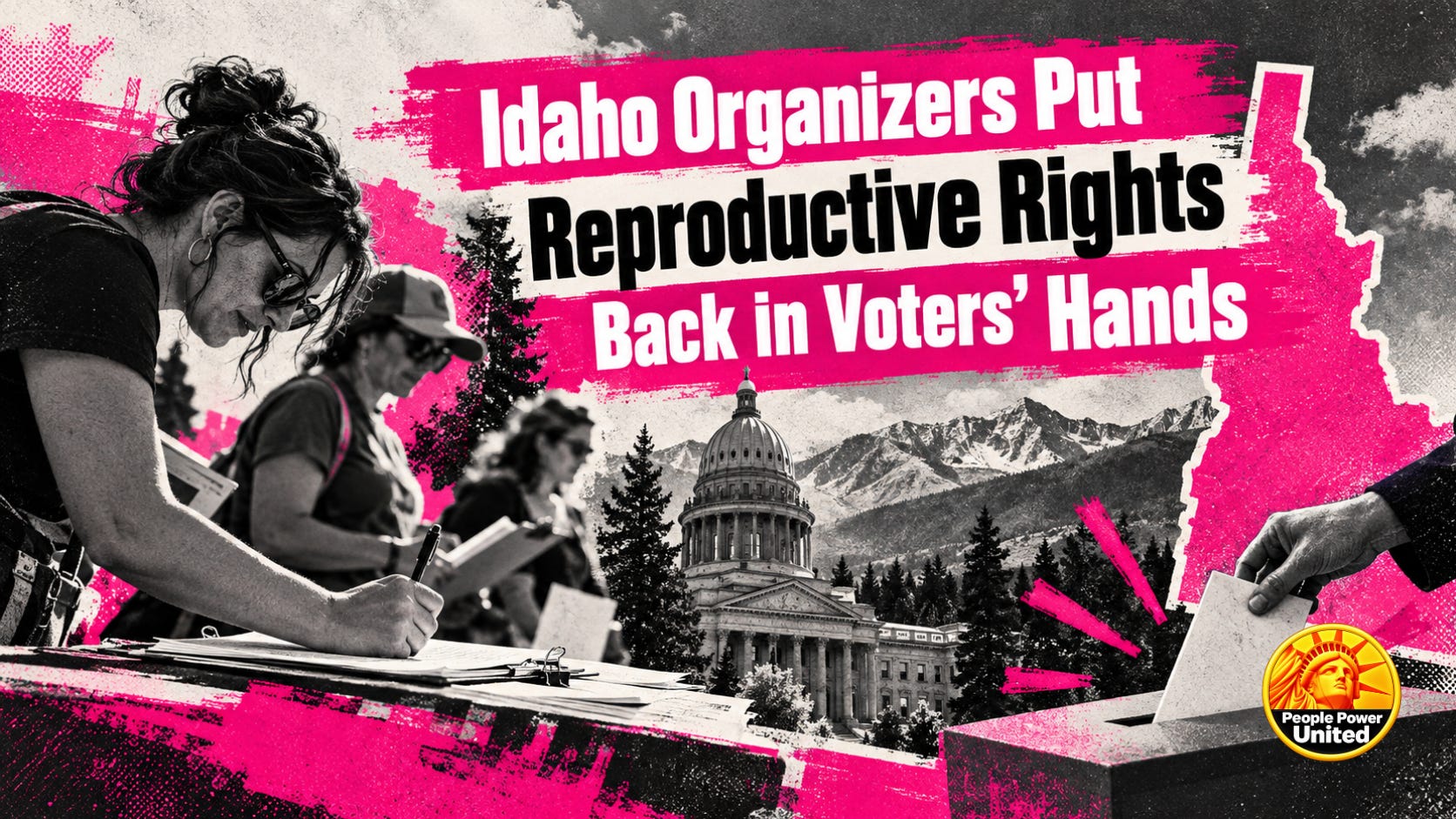
Idaho Organizers Put Reproductive Rights Back in Voters’ Hands
Whatever happens on Election Day, getting Idaho’s Proposition 1 onto the ballot is itself a meaningful organizing achievement.
Volunteers collected more than 110,000 signatures in a deeply conservative state to give voters a chance to reconsider a near-total abortion ban. That required conversations, organizing, signature gathering, and persistence across communities that are often described as politically unreachable.
That is good news because democracy is not only what happens after ballots are printed. It is also the work required to get an issue in front of voters at all. People saw a law they believed was harming their communities and built a path for the public to respond. The Guardian
Organized people created a choice where lawmakers had left very few.
📣 Take Action This Week
🗳️ Take Action» Check your voter registration, polling place, and ballot
Midterm elections will determine governors, attorneys general, state legislatures, members of Congress, and senators who will shape reproductive-health policy. Check your registration now and read the full language of any ballot measures before you vote.
🏥 Take Action» Find verified abortion-care providers and practical support
Laws and provider availability can change quickly. Use a current, verified resource if you or someone you care about needs abortion care, financial assistance, travel support, or information about available services.
📱 Take Action» Help one person make a voting plan
Ask someone you know whether they have checked their registration, polling place, early-voting options, and ballot. One conversation can prevent a problem on Election Day.
Take Action» Support Organizations Doing the Work
These groups are helping defend reproductive freedom in communities across the country: Bans Off Our Bodies
👀 What We’re Watching
Idaho Proposition 1: Watch how abortion opponents, religious organizations, and state leaders respond as voters consider whether to replace the state’s near-total ban with protections closer to the pre-Dobbs standard.
The Texas Senate race: Ken Paxton’s record could become a broader test of whether aggressive state anti-abortion enforcement becomes a credential for federal office.
Medication abortion: The federal review and political pressure surrounding mifepristone remain unresolved. We will continue watching the FDA, Justice Department, and anti-abortion groups pressing for new restrictions.
❤️ One Thing to Carry With You
Reproductive freedom is shaped by more than one court ruling or one election.
It is shaped when organizers collect enough signatures to put a right before voters. It is shaped when a federal agency decides what research gets funded. It is shaped when politicians who used state power to restrict healthcare ask for even more authority.
That is why records matter.
Promises matter too, but only when they are backed by action.
Our bodies are not talking points. Our healthcare is not campaign strategy.
We can read the record, ask questions, vote, organize, and hold public officials accountable for what they do with power.
Laurie Woodward Garcia
(paid with hugs and kisses, not bought by special interests)
Leader, People Power United | In this community, we speak out, show up, and build power against racism, xenophobia, Islamophobia, antisemitism, homophobia, misogyny, sexism, ageism, ableism, sizeism, elitism, transphobia, misogynoir, and bigotry.