

What’s Happening This Week in Reproductive Freedom for All
Reproductive freedom is being shaped this week by what information people can share, what care doctors can provide, how abortion medications are regulated, and what voters will decide.
A federal appeals court kept part of Tennessee’s law blocked, while two Oklahoma mothers are challenging abortion bans after fatal fetal diagnoses.
President Trump’s FDA nominee also faced questions about mifepristone, and voters in Virginia, Nevada, Idaho, and Missouri will consider abortion-related measures this November.
Different stories, but the same reality: reproductive healthcare is shaped by medicine, law, courts, federal policy, and the ballot box.
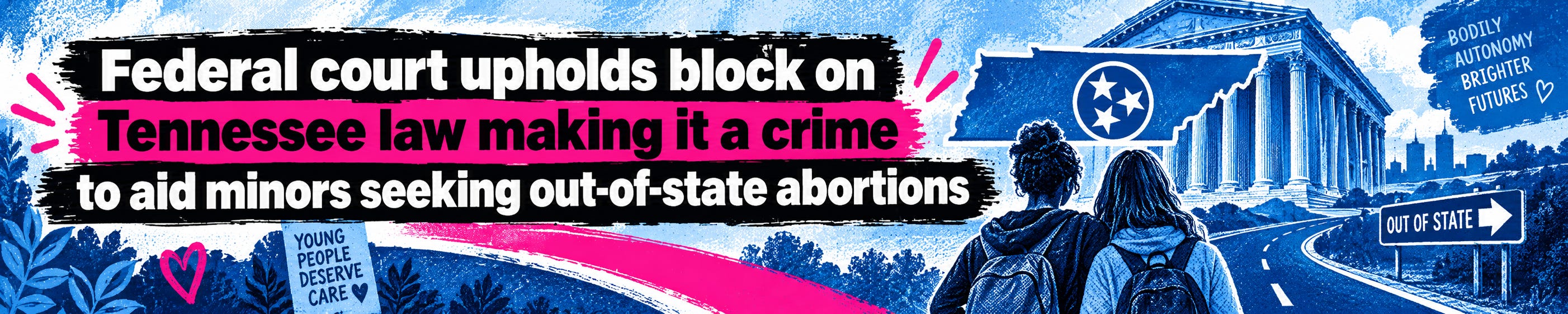
⚖️ Federal court upholds block on Tennessee law making it a crime to aid minors seeking out-of-state abortions
A federal appeals court upheld a ruling blocking Tennessee from enforcing a provision that prohibited adults from “recruiting” minors to obtain abortions without parental consent, including legal out-of-state abortions.
The Sixth Circuit agreed that the provision violated the First Amendment by restricting protected speech. The provision was part of a 2024 law that also addresses transporting or harboring an unemancipated minor for abortion care. Tennessee Lookout
The majority found the law treated speech encouraging abortion differently from speech encouraging a minor to continue a pregnancy. A dissent argued the law could be interpreted more narrowly.
Why it matters: Access to healthcare often begins with access to information. This case raises questions about how far states may go in restricting speech about healthcare that is legal elsewhere.
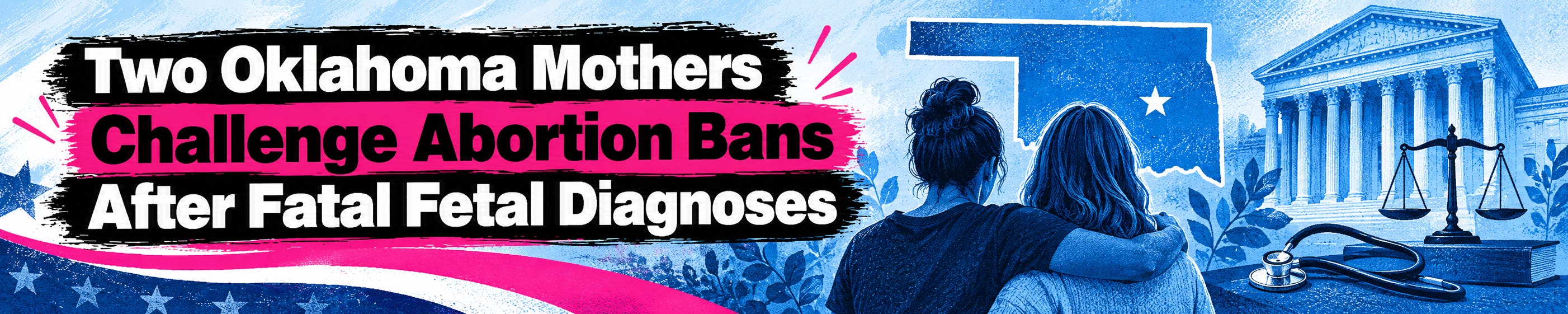
💔 Two Oklahoma Mothers Challenge Abortion Bans After Fatal Fetal Diagnoses
Two Oklahoma mothers are challenging the state’s abortion bans after receiving diagnoses indicating their pregnancies could not result in surviving infants.
The lawsuit argues that patients facing fatal fetal diagnoses should not have to leave Oklahoma for care. State law currently allows abortion when necessary to preserve the pregnant patient’s life. Public Radio Tulsa
One plaintiff, Magon Hoffman, learned her daughter had anencephaly and said she was told she could continue the pregnancy or travel elsewhere for an abortion. She ultimately went to New Mexico. The court has not yet decided whether Oklahoma’s bans may constitutionally apply in circumstances like these.
Why it matters: The case asks what options should remain available when doctors determine a fetus cannot survive, even when the pregnant patient is not facing an immediate medical emergency.
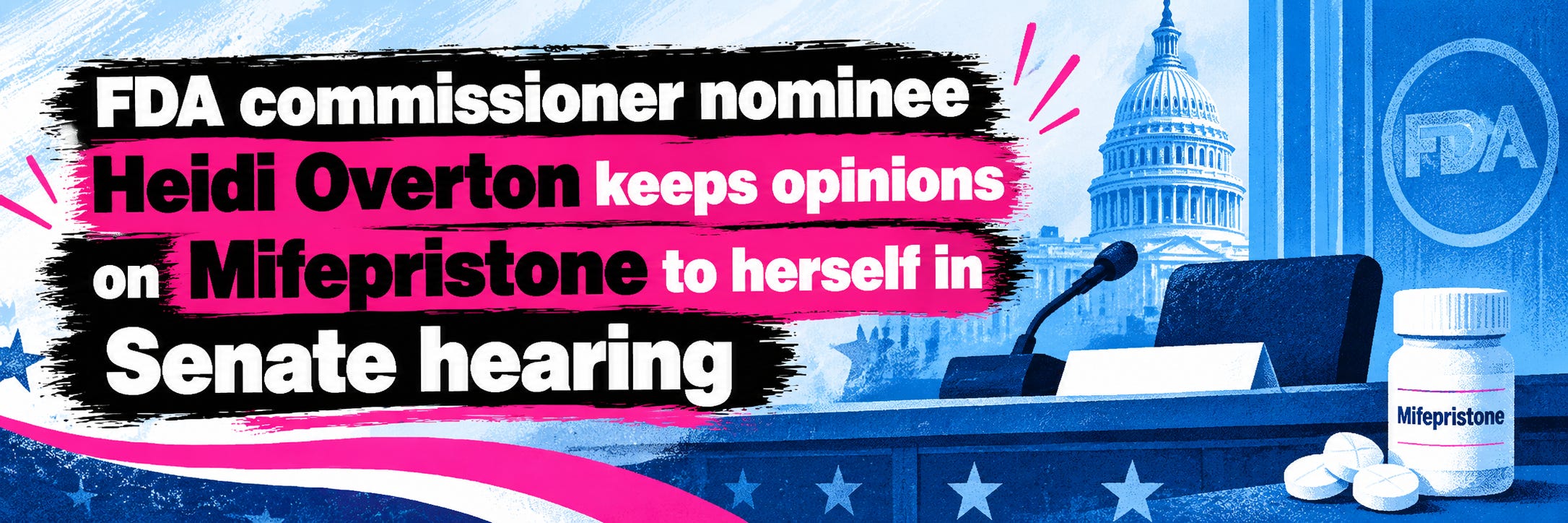
💊 FDA commissioner nominee Heidi Overton keeps opinions on Mifepristone to herself in Senate hearing
President Trump’s nominee to lead the Food and Drug Administration, Dr. Heidi Overton, faced Senate questions this week about mifepristone, a medication used for abortion.
Overton referred senators to existing FDA guidance rather than committing to whether she would preserve or change current rules if confirmed. She said she would review the evidence and follow the agency’s legal responsibilities. STAT
The FDA regulates how medications are approved, labeled, dispensed, and monitored, including access through pharmacies, clinics, telehealth, and the mail.
Why it matters: Federal regulatory decisions can directly affect how medication abortion is prescribed and obtained, making FDA leadership consequential for reproductive healthcare.
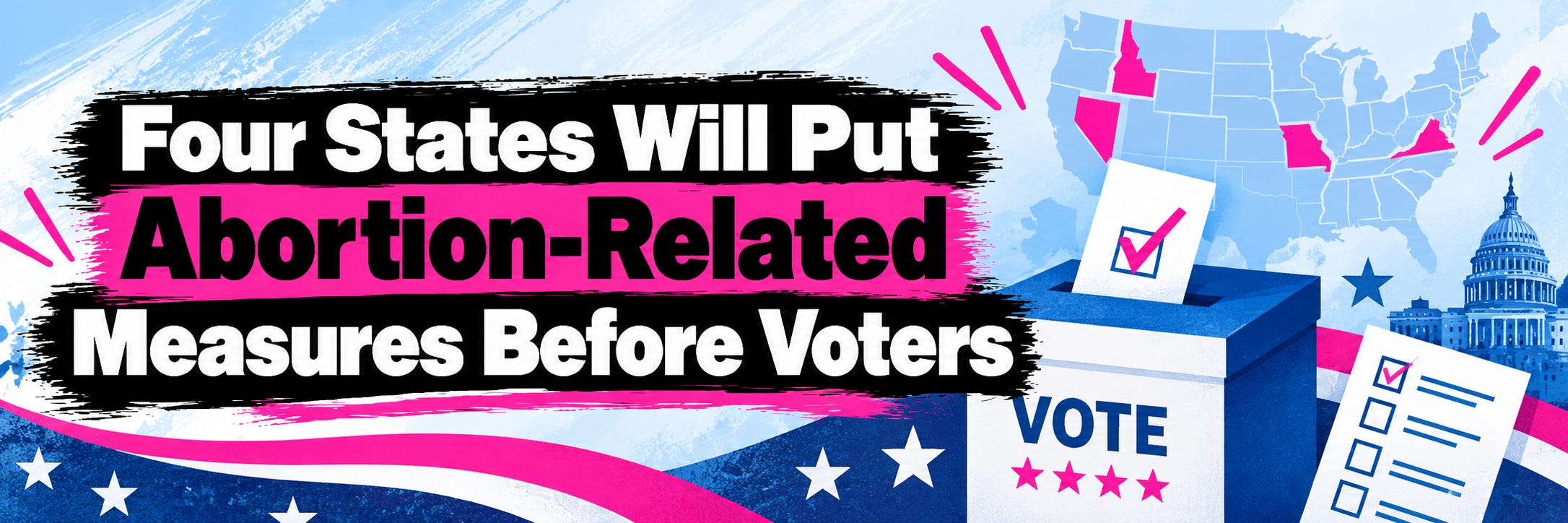
🗳️ Four States Will Put Abortion-Related Measures Before Voters
Four states have abortion-related measures scheduled for the November 3 ballot: Virginia, Nevada, Idaho, and Missouri.
Virginia’s proposed constitutional amendment covers abortion, contraception, and fertility care. Nevada voters will decide for a second time whether to add abortion protections to the state constitution. Idaho will consider a citizen-initiated reproductive-health statute, while Missouri voters will consider replacing abortion protections approved in 2024 with different constitutional language and restrictions. KFF
The measures also differ procedurally. Nevada requires voter approval in two successive general elections, while Idaho’s proposal is a statute that could later be changed by the legislature. Virginia’s measure has also faced litigation over its ballot placement.
Why it matters: Ballot language can determine whether protections are statutory or constitutional, what services are covered, and how much authority future lawmakers or courts retain.
💔 Why This Matters
Reproductive freedom is shaped in courtrooms, clinics, government agencies, and voting booths.
It affects whether someone can find accurate information, what care a doctor can provide, whether a medication remains available, and what rights state law protects.
This week’s stories show how law, medicine, regulation, geography, and elections can shape access to care.
Because reproductive-health policy eventually becomes personal.
A diagnosis.
A prescription.
A trip across state lines.
A decision no one expected to face.
💚 Good News Worth Carrying With You
New clinical guidance is drawing attention to a potential way to reduce ovarian cancer risk.
Doctors are being encouraged to discuss removing the fallopian tubes during another abdominal or pelvic surgery when medically appropriate and chosen after informed counseling. MedPageToday
Many cancers described as ovarian cancers may actually begin in the fallopian tubes. Removing them can lower risk, though not eliminate it, and results in permanent sterilization.
Better prevention begins with better information and informed choices.

📣 Take Action This Week
🗳️ Take Action» Read what will be on your ballot before you vote and review the exact language of measures in your area
Ballot summaries can compress complicated legal changes into a few sentences. Read the full language when possible and look at what existing law says before deciding what you think.
🏥 Take Action» Find verified abortion-care providers and practical support resources near you
Even people who do not need care today may want to know what services are available where they live. Laws and provider availability can change, so use current information rather than relying on something you heard months or years ago.
👀 What We’re Watching
The Tennessee case: The speech provision remains blocked. Watch for whether the state seeks additional appellate review and how the ruling affects enforcement of the remaining portions of the law.
The Oklahoma lawsuit: The case now turns toward the state’s response and whether courts will permit the plaintiffs’ challenge involving fatal fetal diagnoses to proceed.
The FDA nomination: Senators have not finished the confirmation process. The questions surrounding mifepristone will remain important because the FDA continues to oversee the drug’s federal approval and dispensing requirements.
The November ballot: Four states have reproductive-health measures before voters, but their legal structures and consequences differ significantly. Virginia litigation is also still pending while early voting is underway.
❤️ One Thing to Carry With You
Reproductive healthcare is not abstract for the person sitting in the examination room.
It is a diagnosis, a prescription, a legal question, or a decision no one expected to face.
That is why the details matter.
Read past the slogans. Ask what changes, who is affected, and whether people can actually get the care they need.
Know your rights. Know where care is available. Make your own decisions with accurate information.
Because reproductive-health policy eventually becomes personal for someone, and that person deserves clarity, dignity, and real choices.
Laurie Woodward Garcia
(paid with hugs and kisses, not bought by special interests)
Leader, People Power United
People Power United | In this community, we speak out, show up, and build power against racism, xenophobia, Islamophobia, antisemitism, homophobia, misogyny, sexism, ageism, ableism, sizeism, elitism, transphobia, misogynoir, and bigotry.
This is our moment to rise, resist, and reclaim our rights, freedoms, rule of law, and democracy. Millions of Americans are already refusing to back down — in the streets, at the ballot box, and in their communities.
Every movement that was ever won started with people who refused to quit. We are those people.
The future is not lost. It is being built — by us, right now.