

This Week
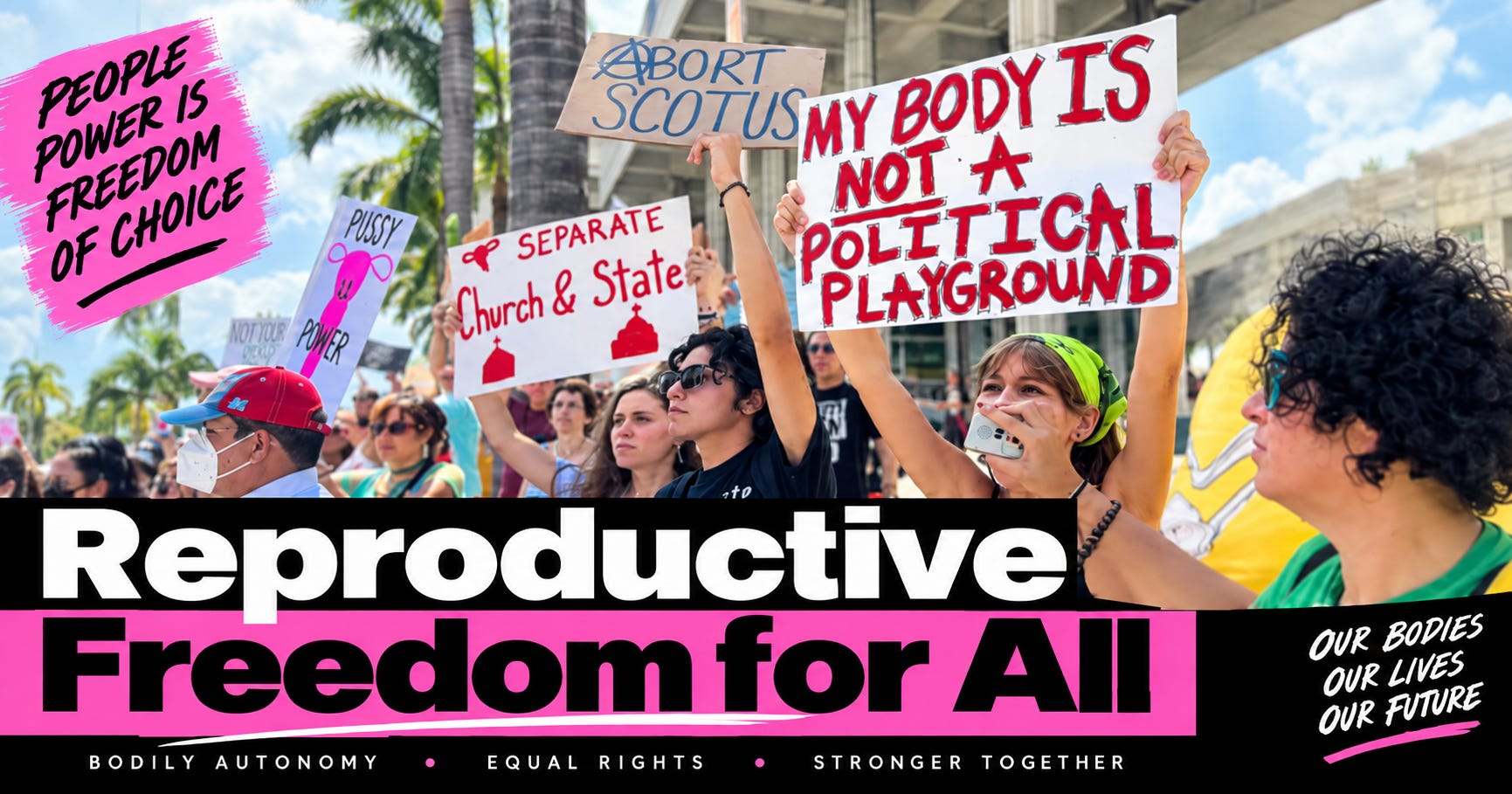
The battle over reproductive freedom is moving through courtrooms, detention centers, insurance plans, and the ballot box.
This week brought a new threat to abortion pills, disturbing reporting about pregnant women in ICE custody, and something worth remembering: courts and voters can still protect reproductive freedom too.
❤️ Who Gets to Make the Decision?
One question connects nearly every story this week:
Who gets to decide what happens to your body?
A Louisiana lawsuit seeks to make abortion medication harder to obtain nationwide. Pregnant women in immigration detention say they struggled to receive basic prenatal and emergency care. In Washington, a federal appeals court upheld a state law protecting abortion coverage.
And in Idaho, voters are preparing to decide whether reproductive freedom, including abortion, contraception, fertility treatment, miscarriage care, and pregnancy care, should receive explicit protection under state law.
Different states. Different institutions. Same fundamental question.
Should politicians and government systems control deeply personal medical decisions, or should those decisions belong to patients and their healthcare providers?
💊 Abortion Pills Face Another Major Court Test
Judges on the conservative 5th U.S. Circuit Court of Appeals appeared skeptical last week of Louisiana’s attempt to overturn federal rules allowing mifepristone to be prescribed through telehealth and delivered by mail.
For now, access remains unchanged. But Louisiana and other anti-abortion states are continuing efforts that could ultimately restrict medication abortion far beyond their own borders, and the case could again move toward the Supreme Court. Reuters
Why it matters: A legal challenge originating in one state could affect patients nationwide.
🤰 ICE Detained More Pregnant Women. Then It Stopped Tracking Miscarriages.
A new Guardian investigation found that ICE recorded 18 miscarriages during the first nine months of the Trump administration, but says it does not have miscarriage data after October 3, 2025, following changes to its medical claims system.
The reporting also documents pregnant detainees describing difficulty obtaining prenatal visits, specialist care, ultrasounds, and follow-up treatment after pregnancy complications. ICE says its 2021 pregnancy directive remains in effect and that pregnant detainees receive appropriate care. The Guardian
Why it matters: Reproductive freedom includes the right to safe pregnancy care, miscarriage care, and medical treatment whether someone is free, incarcerated, detained, documented, or undocumented.
This is reproductive justice too.
⚖️ Washington’s Abortion Coverage Law Survives a Court Challenge
The 9th U.S. Circuit Court of Appeals upheld Washington’s Reproductive Parity Act, rejecting a church’s challenge to the law.
The law generally requires insurance plans offering maternity coverage to also provide abortion coverage while maintaining mechanisms for religious or moral objections. The court concluded the challengers had not shown that the laws targeted religion or resulted from religious hostility. Read the Ninth Circuit decision
Why it matters: This is a real reproductive-rights victory.
State protections still matter. Courts still matter. Laws written before a crisis can become powerful shields when rights come under attack.
🗳️ Idaho Voters Will Decide Reproductive Freedom
Idaho’s Supreme Court approved revised ballot language for Proposition 1, the Reproductive Freedom and Privacy Act, clearing another hurdle before the November 3 election.
The proposal would establish protections for abortion before fetal viability and in medical emergencies afterward. It goes further than abortion alone, protecting decisions involving contraception, fertility treatment, childbirth, miscarriage care, prenatal care, pregnancy care, and postpartum care. Idaho Capital Sun
Why it matters: Idaho currently has one of the country’s strictest abortion bans. This November, voters themselves will have an opportunity to decide whether the law should change.
💔 Why This Matters
Reproductive freedom does not disappear only when lawmakers pass an abortion ban.
It can disappear when a patient cannot get medication.
When a pregnant woman cannot see an OB-GYN.
When insurance refuses to cover care.
When doctors fear criminal or civil penalties.
When government decides it knows better than the patient sitting in the examination room.
But this week’s stories also reveal the counterforce.
Judges can reject attempts to weaken access. States can protect care. Investigative journalists can expose neglect. Voters can rewrite laws. Patients, doctors, advocates, and communities can keep pushing institutions to change.
That is why reproductive freedom remains worth defending.
💚 Good News Worth Carrying With You
Massachusetts Gov. Maura Healey announced a proposal this week to put $2 million into expanding free nurse home visits for families with newborns and strengthen screening and services around postpartum mental health.
The proposal still requires legislative action, so this is not a finished victory. But it represents something reproductive policy discussions too often forget:
Supporting reproductive freedom also means supporting people after they give birth. Boston Globe
📣 Take Action This Week
The mifepristone case makes one existing People Power United action especially timely.
Mifepristone has been FDA-approved for more than 25 years, yet political and legal efforts continue to threaten access. The Senate has oversight authority over the FDA and can demand that medical decisions remain grounded in evidence rather than political pressure.
💊 Take Action» Tell Senators: Protect Safe Access to Mifepristone and Don’t Let Politics Override Science
One action. One minute. One more voice demanding that medical care stay between patients and healthcare professionals.
👀 What We’re Watching
The mifepristone ruling: The 5th Circuit has heard arguments. Its eventual decision could determine whether Louisiana’s challenge continues and could put abortion-pill access back on a path toward the Supreme Court.
Idaho Proposition 1: The measure is officially headed to voters on November 3. It could become one of this year’s most important tests of abortion and broader reproductive-freedom protections at the ballot box.
❤️ One Thing to Carry With You
It is easy to look at reproductive freedom in America and see only what has been lost.
Look again.
A court just preserved abortion coverage in Washington.
Another court questioned an attempt to restrict abortion pills nationwide.
Idaho voters will get the final word on a sweeping reproductive-freedom proposal.
Massachusetts is talking about treating postpartum healthcare like healthcare rather than an afterthought.
And people continue to document abuses, challenge laws, organize communities, protect patients, and demand better.
Our freedom has never survived because powerful people generously handed it to us.
It survives because people defend it.
And we are still here.
Laurie Woodward Garcia
(paid with hugs and kisses, not bought by special interests)
Leader, People Power United
People Power United | In this community, we speak out, show up, and build power against racism, xenophobia, Islamophobia, antisemitism, homophobia, misogyny, sexism, ageism, ableism, sizeism, elitism, transphobia, misogynoir, and bigotry.
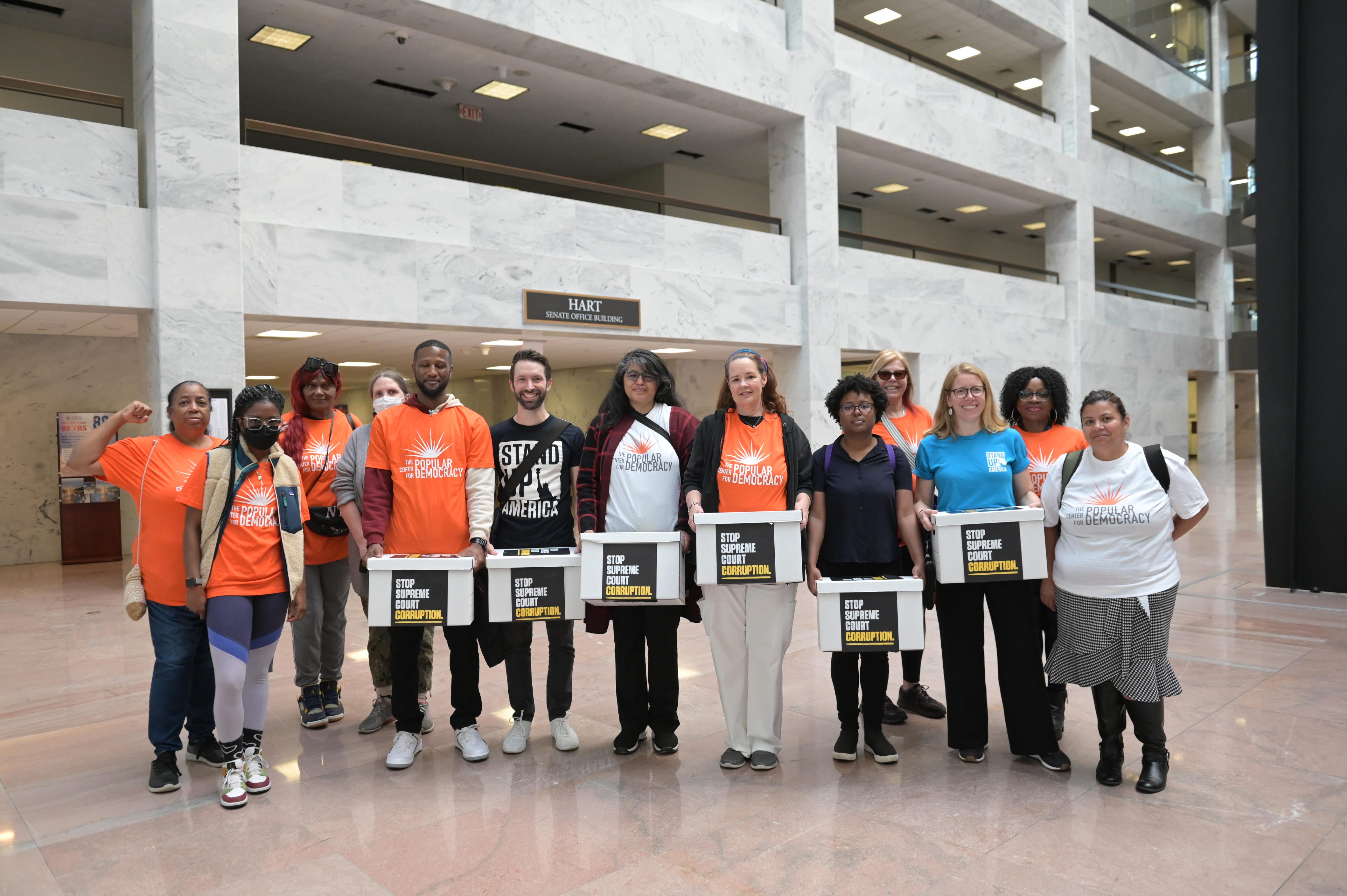
This is our moment to rise, resist, and reclaim our rights, freedoms, rule of law, and democracy. Millions of Americans are already refusing to back down — in the streets, at the ballot box, and in their communities.
Every movement that was ever won started with people who refused to quit. We are those people.
The future is not lost. It is being built — by us, right now.