



Reproductive Freedom for All: The Movement Is Now — Here’s How to Join It
Every day in 2026, reproductive rights hang in the balance — not as a future threat, but as an active, unfolding reality. In Texas, the Trump administration is deliberately transferring pregnant immigrant girls — some as young as 13, most survivors of rape — to a medically inadequate shelter specifically to deny them abortion access under the state's near-total ban. In Maine, a Democratic Senate primary is forcing a hard reckoning over whether the prochoice movement will fight for the legislative tools — including ending the filibuster — needed to pass federal abortion protections. And in Washington, Gov. Bob Ferguson signed a law to finally unlock a mifepristone stockpile that bureaucratic red tape had nearly rendered useless. Real people, real consequences, right now. This is not a series of isolated local disputes. It is a national strategy — and it demands a national response.
Why the Grassroots Resistance Can’t Wait

🔊 Take Action Now — Because Waiting Is Not an Option
The prochoice movement needs you, and it needs you today. Here’s how to show up:
🛡️ Take action: Oppose attempts to dox abortion patients or expose their medical records to hostile third parties
🏥 Take action: Stop attacks on Planned Parenthood and community clinics
🔍 Take action: Demand an investigation into crisis pregnancy centers that mislead patients with inaccurate or incomplete medical information
💚 Take action: Support organizations on the front lines, including Bans Off Our Bodies and your local abortion fund
🗳️ Bonus action: Register to vote, vote in every election, and help your community do the same. Reproductive freedom is won and lost at the ballot box.
👑 Bonus action: Sign up for the next national No Kings Day of Action and show up in solidarity with everyone whose rights are under attack.

What’s Happening: Three Stories Exposing the Coordinated Attack on Reproductive Rights
The assault on reproductive justice rarely announces itself plainly. It arrives as a federal housing directive, a Senate endorsement, a bureaucratic fee schedule. Each story looks local.
🚸 Trump Is Sending Pregnant Migrant Girls to Texas to Strip Their Abortion Rights
The Trump administration has ordered that every pregnant unaccompanied minor in federal custody be transferred to a single shelter in San Benito, Texas — a facility that the administration’s own health officials have flagged as medically inadequate for the specialized care these children require. More than a dozen girls have been placed there since July; some are as young as 13, and at least half became pregnant as a result of rape. In Texas, abortion is banned in nearly all circumstances, including cases of rape and incest. Federal officials who spoke out — all anonymously, fearing retaliation — said the intent is explicit: concentrate pregnant children in a state where they cannot access abortion care. The Guardian
Why This Matters: A former federal official who ran this same program during Trump’s first term confirmed on the record that this move is “100% and exclusively about abortion” — a strategy he described as a 2017 dress rehearsal now being executed with fewer obstacles. These are children in government custody, with high-risk pregnancies, in a region with some of the worst healthcare access in the country. Trapping them in Texas isn’t a placement decision. It is the government using its power over the most vulnerable people imaginable to enforce forced pregnancy. That is the destination every abortion criminalization bill points toward.
🗳️ The Maine Senate Primary Could Decide the Future of Federal Abortion Protections
Maine’s June 9 Democratic primary has become a national flashpoint in the abortion rights movement. Abortion advocacy groups including Reproductive Freedom for All have endorsed Gov. Janet Mills over challenger Graham Platner — despite Platner leading in polls and explicitly supporting the elimination of the Senate filibuster, the procedural barrier that has repeatedly prevented the Women’s Health Protection Act from becoming law. Mills, who would be the oldest freshman senator ever elected, supports preserving the filibuster. The race has turned sharply negative, with the Mills campaign airing ads targeting Platner over decade-old Reddit posts on sexual violence. Slate
Why This Matters: The Women’s Health Protection Act has already passed the House. The Senate filibuster is the wall between that bill and law. The Maine primary is a direct referendum on whether the prochoice movement is willing to fight for the tools it needs to win federally — not just defend what’s left at the state level. Voters deserve a clear-eyed conversation about what it will actually take to restore federal abortion protections, and which candidates will vote to make that possible.
💊 Washington Signs a Law to Unlock Its Mifepristone Stockpile — and the Timing Couldn’t Be More Critical
Washington Gov. Bob Ferguson signed Senate Bill 5917 on March 14, removing the requirement that the state recover its purchase cost before distributing mifepristone from its stockpile. The old fee structure — which required the state to charge at least the purchase price plus five dollars per dose — had left 30,000 doses sitting unused until they nearly expired. The new law allows free distribution, directs the Department of Corrections to coordinate with the Department of Health to identify providers, and takes effect immediately, with advocates hoping to rescue a batch expiring this month. Seattle Times
Why This Matters: Washington built its mifepristone stockpile because lawmakers anticipated a federal assault on abortion pill access — and that assault is now underway, with Louisiana’s federal lawsuit threatening to ban telehealth abortion prescriptions nationwide and Sen. Josh Hawley pushing legislation to revoke FDA approval of mifepristone entirely. A cost requirement nearly made Washington’s preparation worthless. Fixing that in real time, while the national attack intensifies, is exactly the kind of state-level shield work that keeps abortion access alive for the people who need it most.

Why These Stories Matter
The Trump administration is not hiding what it is doing to pregnant immigrant children. A former federal official said it plainly. The machinery of the federal government is being used to confine pregnant rape survivors — children — in a state with an extreme abortion ban because the people in power have calculated that these children cannot fight back. That calculation is part of the same strategy driving the Louisiana mifepristone lawsuit, the filibuster that blocks the Women's Health Protection Act, and every other mechanism designed to make abortion access structurally impossible without ever having to defend a ban at the ballot box.
💔 Who Is Harmed — and Who Is Fighting Back
The harm falls on immigrant children with no legal standing. On rural patients who cannot travel. On people in states where every clinic has closed and every telehealth option is now under legal siege. That asymmetry is a design feature, not a side effect. And yet: Washington's shield law is working. Ballot initiatives protecting abortion access have passed in state after state since Dobbs. People Power United and advocates across the country are pressing every lever available — the courts, the states, the ballot box. The Maine primary is messy and real and worth the fight precisely because the filibuster question is not abstract: it is the difference between a law that exists and a law that doesn't. When voters get a direct say on reproductive freedom, they vote to protect it. Every time.

What Comes Next: The Women’s Health Protection Act
The path forward is through the courts, the ballot box, and Congress — and there are concrete legislative tools available right now.
The Women’s Health Protection Act: A Federal Shield for Abortion Rights
The Women’s Health protection Act (WHPA) would establish a federal statutory right to provide and access abortion care — one that cannot be overridden by state-level bans or restrictions. Under former Leader Pelosi, it has already passed the House. It is currently blocked in the Senate by Republican opposition.
What the WHPA does:
Protects abortion access nationwide with a binding federal statutory guarantee
Prevents state bans from interfering with the patient-provider relationship
Restores bodily autonomy as a legally enforceable right — not merely a precedent subject to reversal
Has already passed the House; blocked by Republicans in the U.S. Senate
Passing the WHPA requires electing senators who will vote for it — which means registering voters, turning out voters, and building the sustained civic infrastructure that converts political will into electoral outcomes. That work is already happening, and it is making a measurable difference.
⚖️ Take action: Urge your members of Congress to co-sponsor and support the Women’s Health Protection Act
Together, we can champion our rights, freedoms, and democracy, hold our leaders accountable to the people’s will, and inspire voters to make a meaningful difference.
Laurie Woodward Garcia (paid with hugs and kisses, not bought by special interests) Leader, People Power United
People Power United | In this community, we will always speak out against racism, xenophobia, Islamophobia, antisemitism, homophobia, misogyny, sexism, ageism, ableism, sizeism, elitism, transphobia, misogynoir, and bigotry!
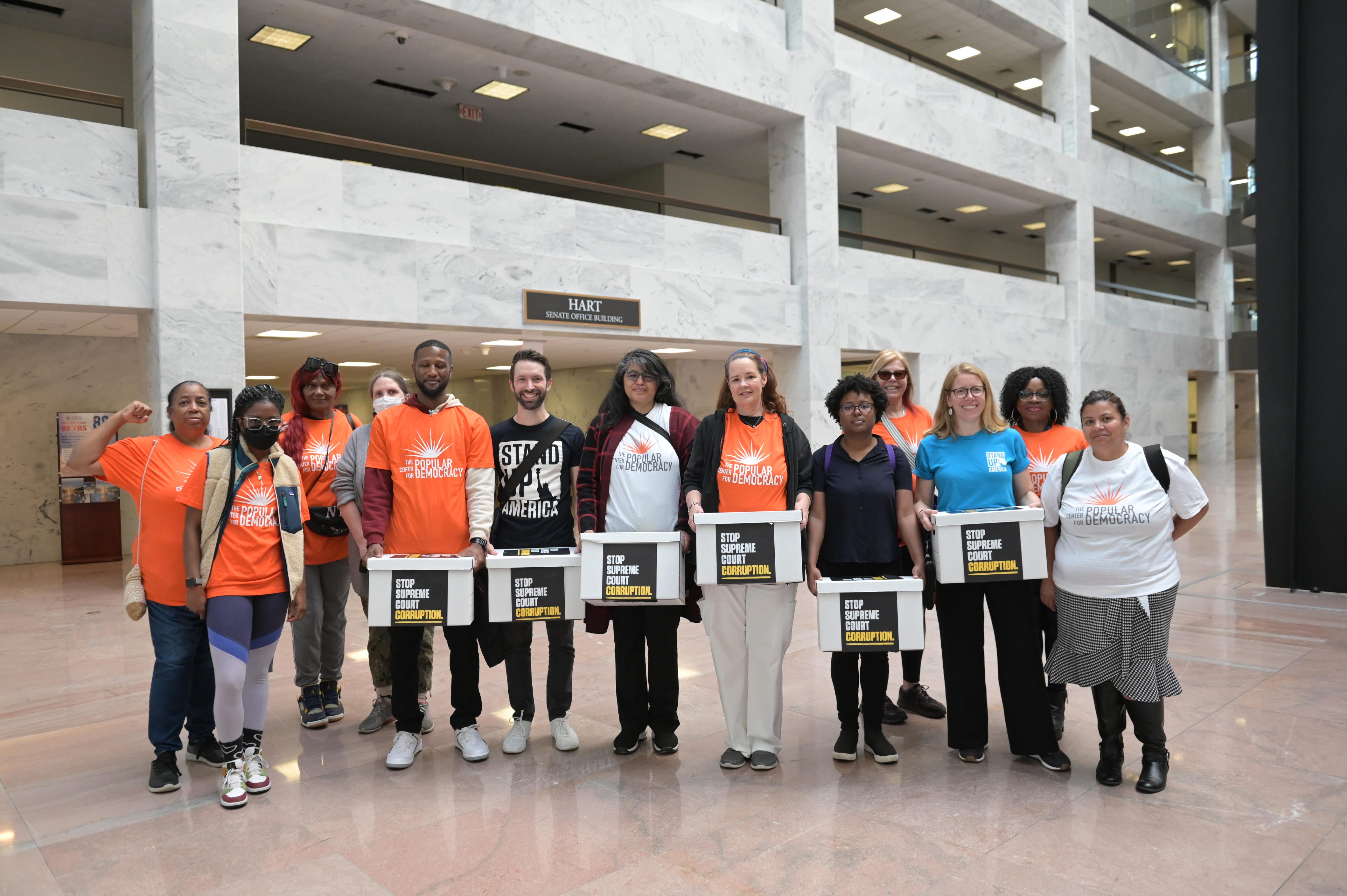
This is our moment to rise, resist, and reclaim our rights, freedoms, rule of law, and democracy. Millions of Americans are already refusing to back down — in the streets, at the ballot box, and in their communities.
Every movement that was ever won started with people who refused to quit. We are those people.
The future is not lost. It is being built — by us, right now.